
Applications
High current, seven situations
High current moves between the same four places in most projects: the transformer, the switchgear, the converter and the load. These are the seven situations our customers ask us to solve most often.
From the installation record
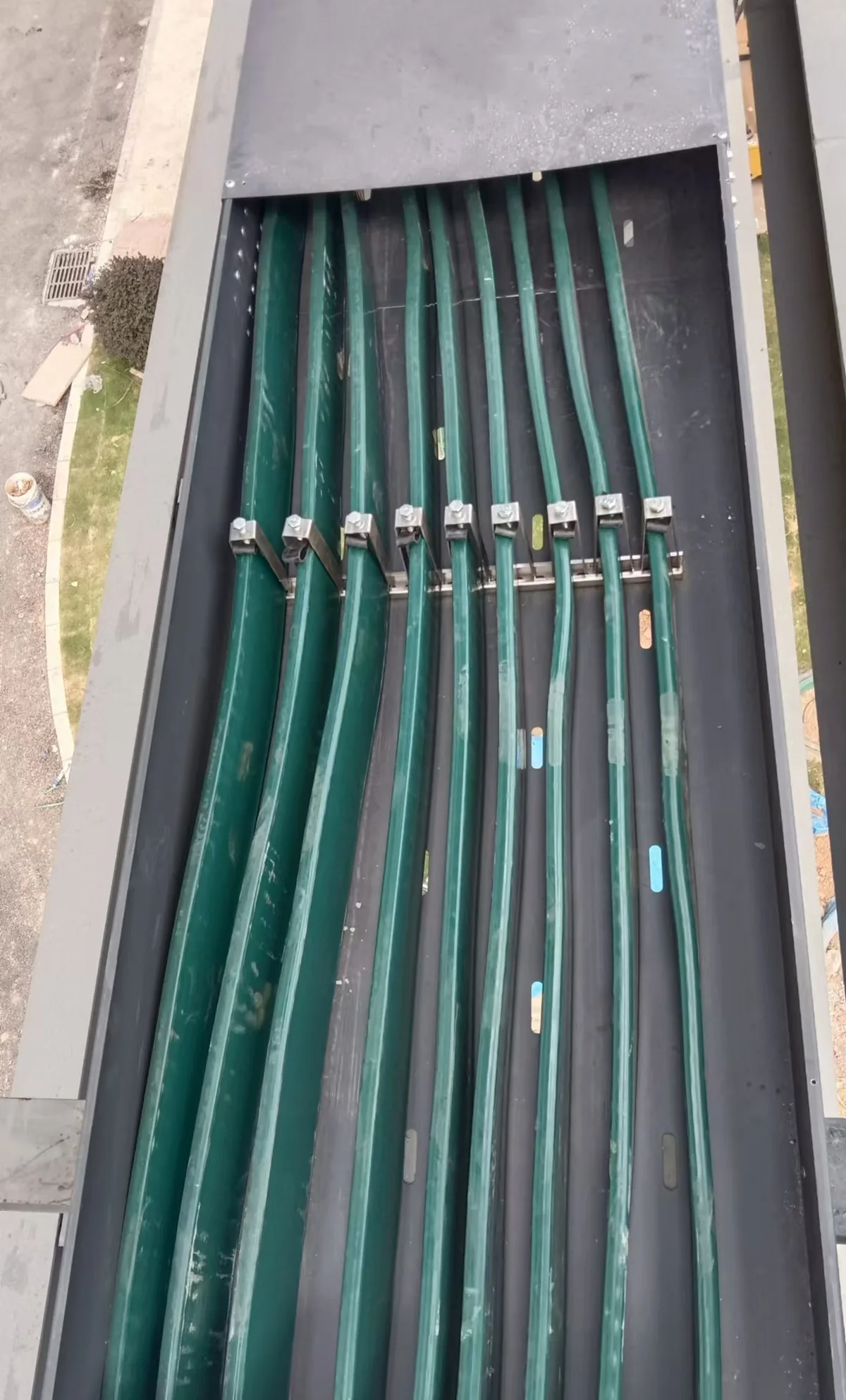
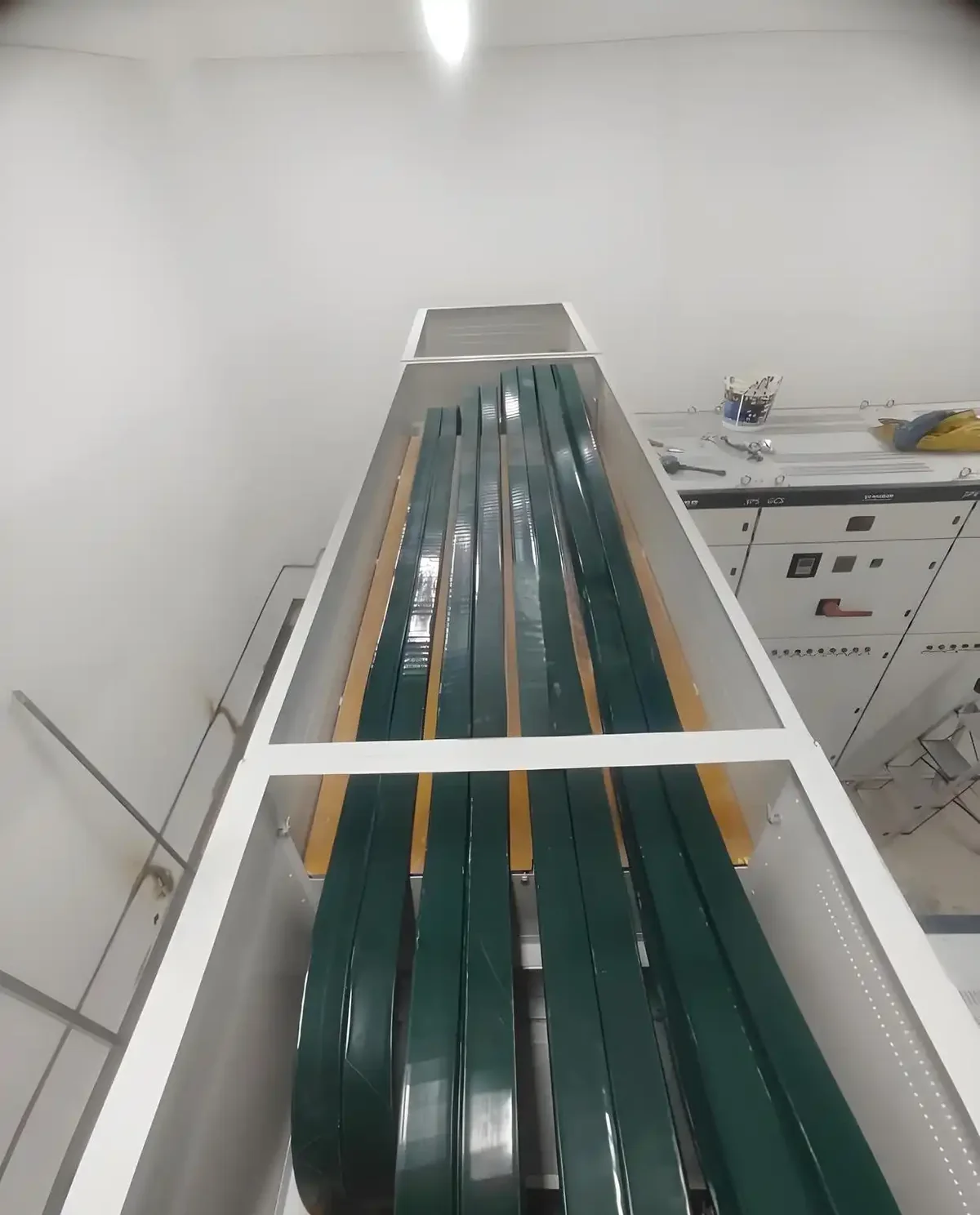
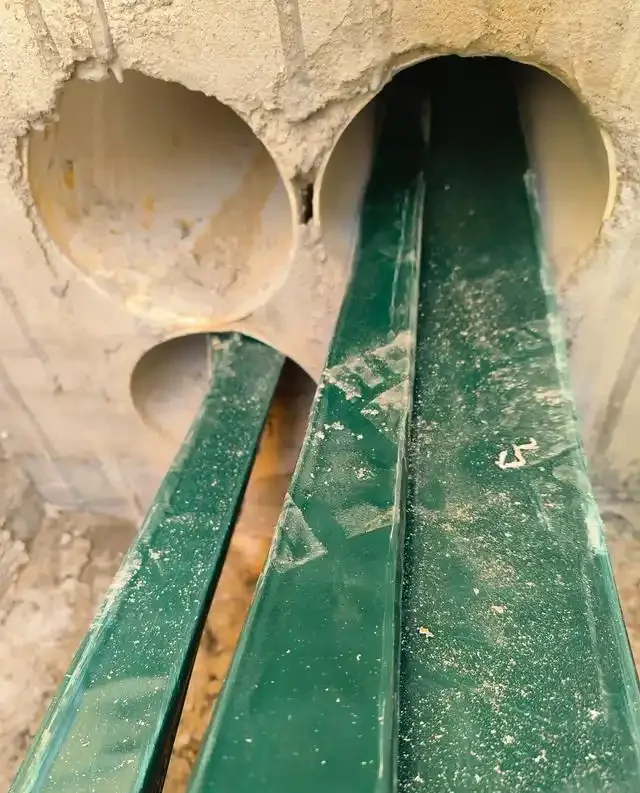
What those routes look like on site
A single-line diagram only shows the circuit. These are the same kinds of route, photographed as they were installed.
EV Super Charging Stations
Get power from the distribution room to the dispensers without a bus duct run
Charging parks are built fast and often expand in phases. Flexible cable is delivered in one piece, laid through trenches or trays, and re-terminated on site when new dispensers are added, so the site does not need a bus duct installation crew.
What we supply
- Flexible cable from the transformer or switchgear to the charging cabinets
- DC-side connections and matched lugs
- T-connectors and conversion boxes for phased expansion
Energy Storage Systems
High current inside a small footprint
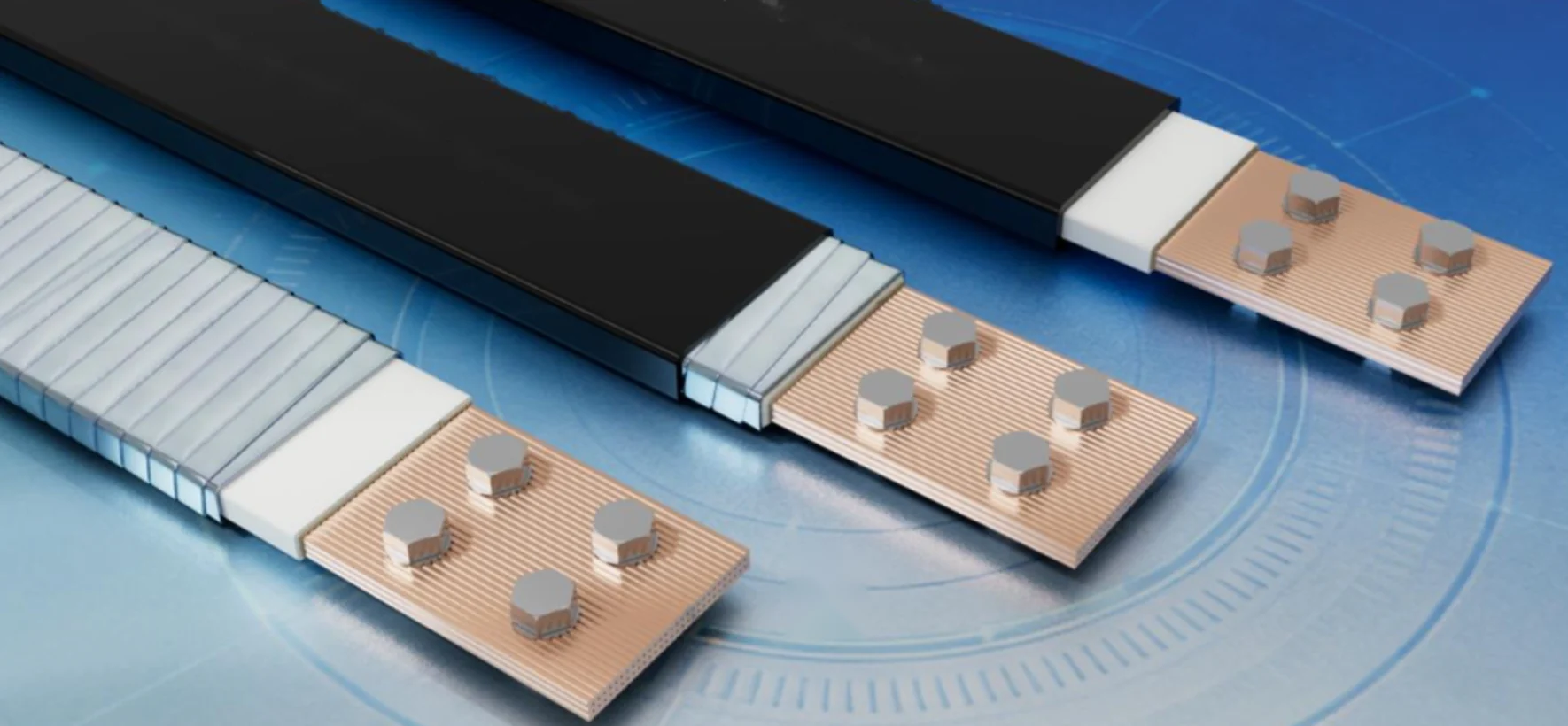
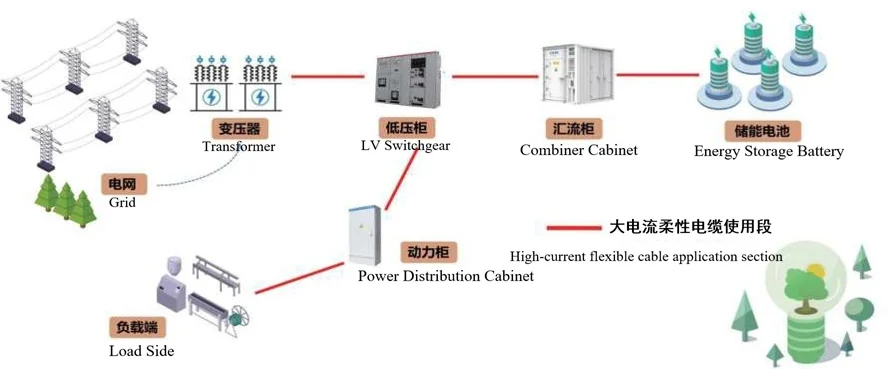
Storage containers and cabinets are dense with current-carrying parts. Laminated and flexible busbar bend around corners and fit where a rigid bus duct cannot, and the flat profile dissipates heat better in an enclosed space.
What we supply
- Flexible cable between transformer, LV switchgear, combiner cabinet and battery clusters
- Laminated flexible busbar inside cabinets and racks
- Conversion boxes for paralleling containers
Photovoltaic Plants
Outdoor routes that survive sun, water and time
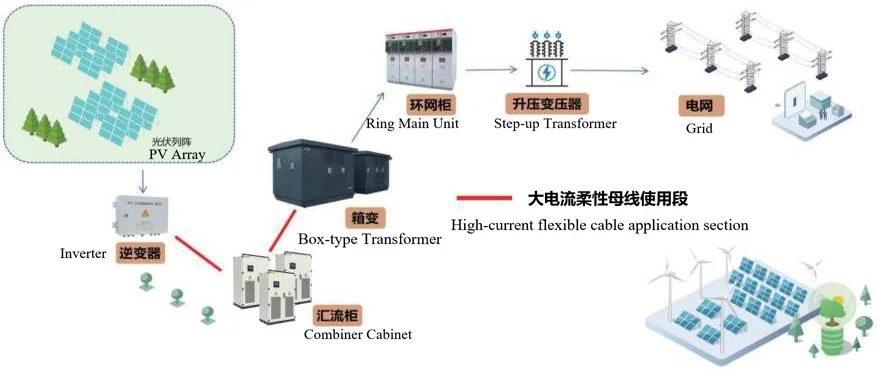
PV sites are laid out over large areas, often with long runs between combiner cabinets, inverters and step-up transformers. Cable is buried directly, pulled through conduit or laid in trays, so the sheath compound and the IP68 joint are what keep the system running.
What we supply
- DC and AC flexible cable for inverter and combiner connections
- Buried and tray-rated constructions
- Project-length drums to cut waste on site
Wind Power
Flexible enough for the tower, tough enough for the coast
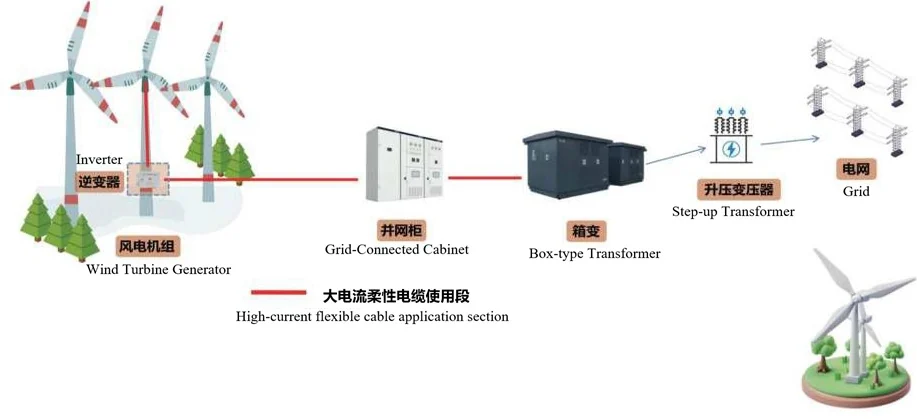
Wind projects combine long collector runs with confined space inside the tower base and nacelle. A flexible high-current cable takes the bends, tolerates vibration and keeps the number of joints down.
What we supply
- Collector-circuit connections from turbine to box-type transformer
- Cable for the grid-connected cabinet and step-up transformer
- Connectors rated to IP68
Industrial Buildings and Parks
Rework the layout without cutting the supply
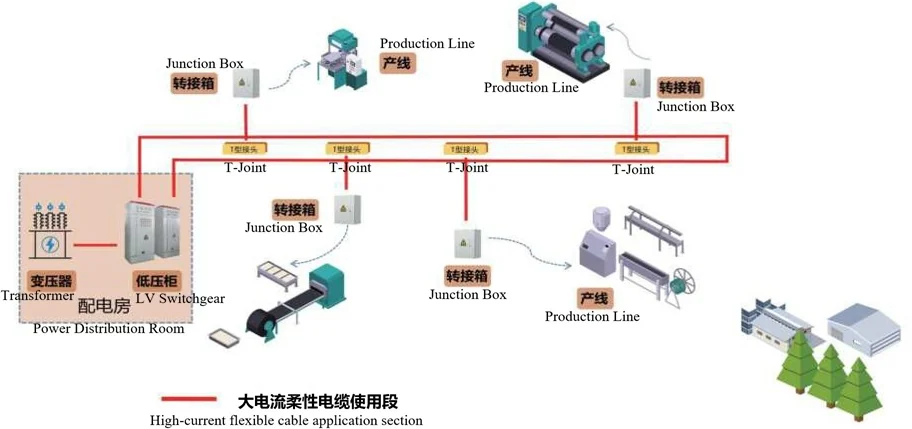
Factories are reorganised constantly. Flexible cable can be cut, re-routed and re-terminated during a plant upgrade, and branches can be tapped from the main line while the rest of the building stays energised.
What we supply
- Main distribution runs from the park substation to each building
- In-plant drops from the distribution room to production lines
- T-connectors, junction boxes and conversion boxes
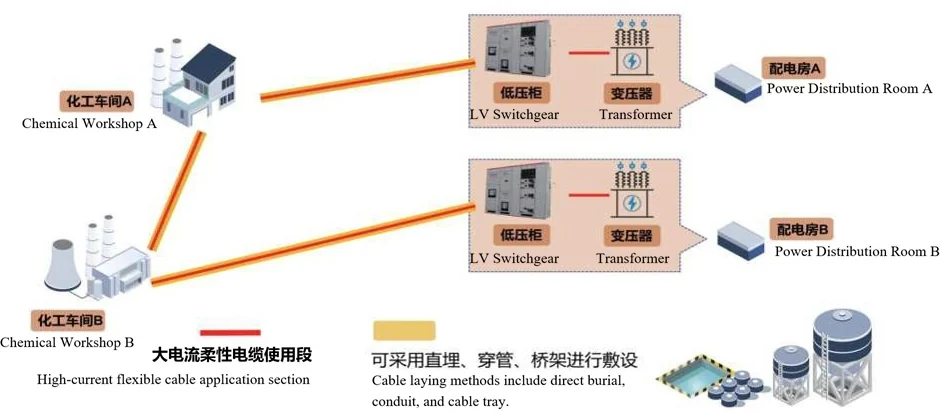
Chemical and Process Parks
Routes that can be inspected, cleaned and repaired
Process plants need supply routes that resist moisture and chemical exposure and that can be worked on without a long shutdown. Cable is laid in trenches and trays between workshops and distribution rooms.
What we supply
- Workshop-to-distribution-room connections
- Sheath compounds for humid and mildly corrosive environments
- Fire-retardant and fire-resistant options
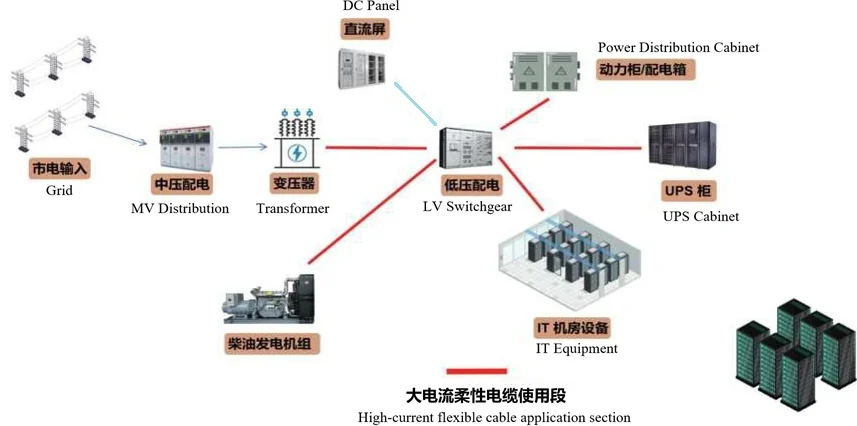
Data Centres and IDC Rooms
High current in the tightest part of the building
Data centre power chains run from the MV distribution through transformers and LV switchgear to the DC panel, power distribution cabinet and UPS cabinets. Compact, flexible conductors keep the cable room workable and the voltage drop low.
What we supply
- Transformer to LV switchgear, and switchgear to UPS connections
- Laminated busbar for cabinet interiors
- Low voltage drop constructions for long internal runs
Not sure which cable size you need?
Send the load in amps or kVA, the voltage, the route length and how the cable will be laid. We will come back with a conductor size, the voltage drop and the short-circuit rating, and a drawing to approve before anything is produced.
Request a selectionSend us the load and the route
Tell us the current, voltage, route length and laying method. You will have a specification, a drawing and a price within one working day.