
Laminated Flexible Busbar
Insulated laminated flexible busbar
Insulated laminated busbar built from thin copper plates, for tight spaces inside cabinets, converters and battery racks.
- 7 mm² to 1,200 mm²
- PVC or TPE insulation, UL94 V-0
- 600 Vac / 750 Vdc and 1000 Vac / 1500 Vdc
- Holes punched through the stack, no lugs
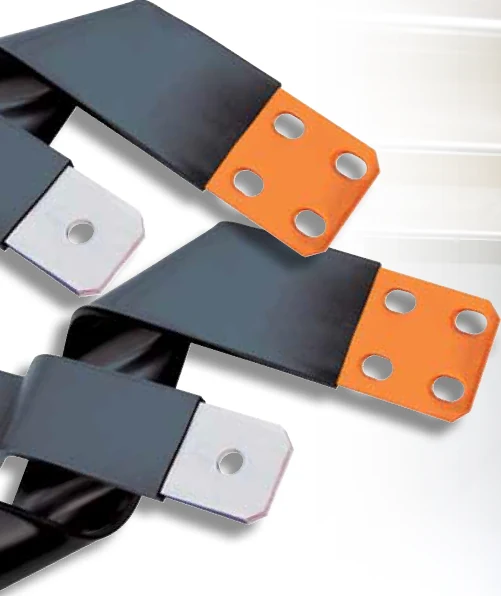
Overview
Laminated Flexible Busbar from YSN
Laminated flexible busbar is stacked from thin annealed copper plates, which makes it thin enough to sit behind a cabinet panel and flexible enough to absorb installation tolerance. Holes are punched straight through the stack, so no separate terminals are needed, and the extruded insulation can be printed with your own marking. It is the replacement for heavy cable and rigid busbar inside compact equipment.
What we supply
- Stacked thin-plate busbar from 7 mm² to 1,200 mm²
- PVC or TPE insulation, extruded over the stack
- Punched, bent and tinned to drawing
- Sample approval before batch production
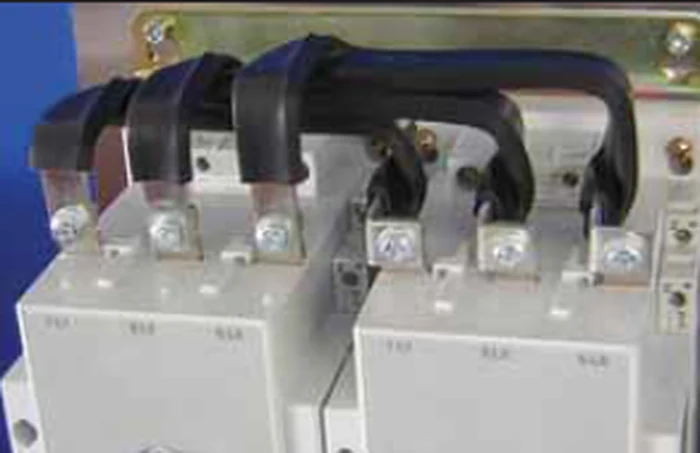
The product
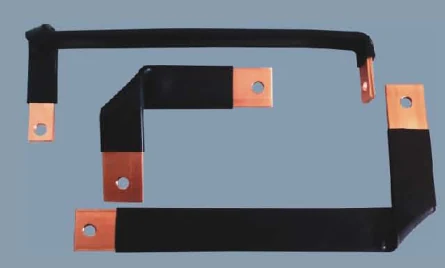
Plates, insulation and punched connection
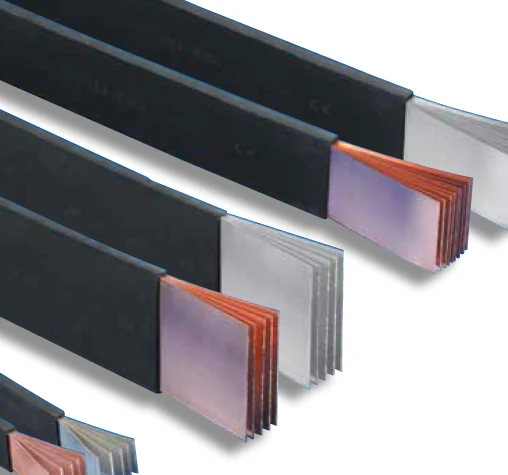
The stack is what gives the busbar its current, the extruded insulation is what gives it the voltage class, and the holes are punched straight through both.
Technical requirements
Specification overview
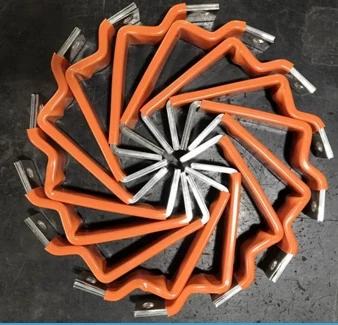
Conductor and insulation are specified separately: the plate stack sets the current, the extruded insulation sets the voltage class and the environment.
- Conductor
- Annealed electrolytic copper T2-Cu, copper content ≥ 99.9%; 0.3–1 mm per plate; bare or tin plated
- Cross-section range
- 7 mm² to 1,200 mm²
- Maximum conductor
- 120 × 12 mm
- Conductivity
- ≥ 56.2 MS/m (≥ 97% IACS)
- Tensile strength
- ≥ 200 MPa, with elongation ≥ 30%
- Insulation
- PVC (orange or black) or TPE (grey), extruded over the stack
- Insulation thickness
- 1–1.5 mm orange PVC; 1.8–2.2 mm black PVC
- Dielectric strength
- Above 23 kV/mm, with an oxygen index of 30%
- Insulation strength
- Tensile ≥ 20 MPa; elongation above 180% after 135 °C for 7 days
- Operating temperature
- PVC −30 °C to +105 °C; TPE −40 °C to +135 °C
- Flame retardancy
- Self-extinguishing, UL94 V-0
- Withstand voltage
- 15 min at 50 Hz: above 15 kV to earth, above 30 kV between bars
- Voltage class
- 600 Vac / 750 Vdc; 1000 Vac / 1500 Vdc
- Connection
- Holes punched directly through the stack — no separate terminals
- Marking
- Silk-screen printing on the insulation on request
Current-carrying capacity
Ampacity by conductor size and temperature rise
| Conductor size, width × plate thickness × plates (mm) | Cross-section (mm²) | Ampacity at ΔT = 20 K (A) | Ampacity at ΔT = 40 K (A) | Ampacity at ΔT = 50 K (A) |
|---|---|---|---|---|
| 9 × 0.8 × 1 | 7.2 | 40 | 50 | 70 |
| 9 × 0.8 × 3 | 21.6 | 110 | 150 | 170 |
| 15 × 0.5 × 4 | 30 | 140 | 200 | 230 |
| 15.5 × 0.8 × 4 | 49.6 | 195 | 265 | 295 |
| 15.5 × 0.8 × 8 | 99.2 | 265 | 380 | 430 |
| 20 × 1 × 2 | 40 | 170 | 240 | 270 |
| 20 × 1 × 4 | 80 | 270 | 380 | 440 |
| 20 × 1 × 6 | 120 | 330 | 470 | 530 |
| 20 × 1 × 10 | 200 | 420 | 580 | 650 |
| 24 × 1 × 4 | 96 | 300 | 430 | 530 |
| 24 × 1 × 6 | 144 | 360 | 510 | 570 |
| 24 × 1 × 8 | 192 | 420 | 590 | 670 |
| 24 × 1 × 12 | 288 | 560 | 750 | 850 |
| 32 × 1 × 4 | 128 | 330 | 470 | 530 |
| 32 × 1 × 6 | 192 | 420 | 590 | 670 |
| 32 × 1 × 10 | 320 | 600 | 840 | 930 |
| 40 × 1 × 6 | 240 | 480 | 680 | 750 |
| 40 × 1 × 10 | 400 | 670 | 920 | 1030 |
| 50 × 1 × 8 | 400 | 680 | 1000 | 1130 |
| 63 × 1 × 10 | 630 | 920 | 1300 | 1450 |
| 80 × 1 × 10 | 800 | 1090 | 1550 | 1730 |
| 100 × 1 × 12 | 1200 | 1300 | 1800 | 2010 |
ΔT is the temperature rise of the bar above ambient — the conductor temperature the busbar reaches under load, less the ambient temperature. Electrical equipment is normally kept at or below 105 °C, so a bar used at 35 °C ambient is chosen from the ΔT = 50 K column at most. Representative sizes are shown; the full list of plate combinations and the non-standard sections are quoted on request.
Why this product
What it gives the project
Space and weight
A flat stack replaces a bundle of cables: shorter, lighter, and the insulation allows conductors to sit closer together.
Vibration
A bolted joint through the stack has no pressed lug to work loose, so it holds up better on vehicles and machines.
Made to your drawing
Bend radius, hole pattern and outline are produced to drawing, with a sample approved before the batch runs.
Product comparison
How it performs against the alternatives
Versus welded flexible connections
| Item | Insulated laminated busbar | Welded flexible connection |
|---|---|---|
| Process | Machining only, so the process is short and suits batch production | Welding sequence plus a plating step afterwards |
| Internal oxidation | No high-temperature molecular welding, so the conductor cannot oxidise inside | High-temperature welding; post-weld plating can leave acid residues |
| Flame rating of the covering | Insulation rated UL94 V-0 | Heat-shrink sleeving, rated VW-1 |
| Yield | Reject rate close to zero | Assemblies are scrapped when a joint fails |
| Cost and delivery | Copper strip is bought ready plated, so cost and lead time stay under control | More operations and higher surface-treatment cost |
| Terminations | Direct connection through punched holes, no lugs and no pressing | Terminals pressed or welded on |
Current tables per section on request
The current-carrying capacity of each plate count is published against temperature rise. Tell us the current and the temperature rise you can accept, and we will return the plate stack, the insulation and a drawing.
Ask for the current table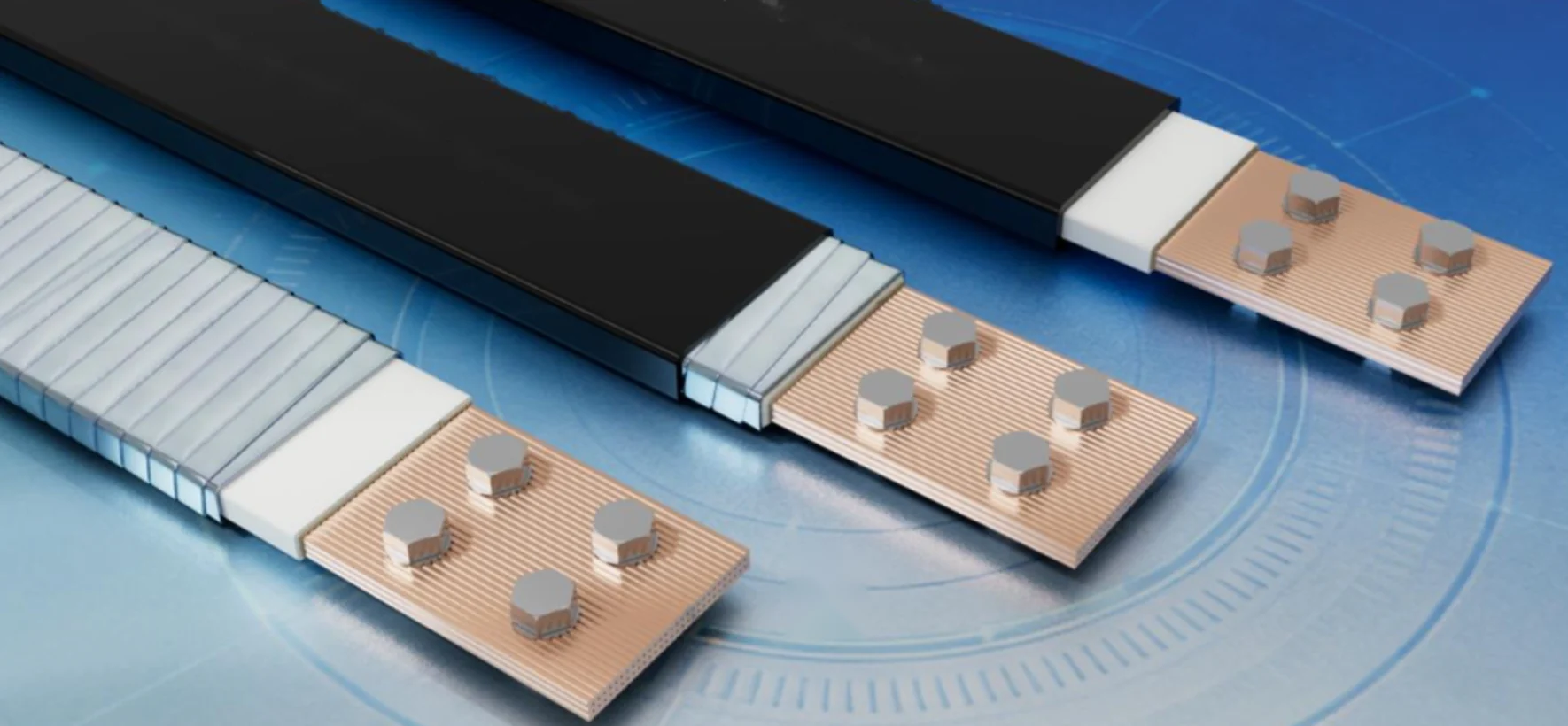
Send us the load and the route
Tell us the current, voltage, route length and laying method. You will have a specification, a drawing and a price within one working day.